Managing money without a system is the fastest way to stay broke, no matter how much you earn. This is exactly where the 50/30/20 rule comes in. It’s a simple, logical, and proven budgeting framework that helps you control spending, save consistently, and still enjoy life without guilt.
Unlike complicated spreadsheets or unrealistic money advice, the 50/30/20 rule is practical. It works whether you’re a student, salaried employee, freelancer, or business owner.
In this guide, you’ll learn how the 50/30/20 rule works, how to apply it correctly, common mistakes to avoid, and how to use tools like a 50/30/20 calculator and 50/30/20 budget template to stay disciplined.
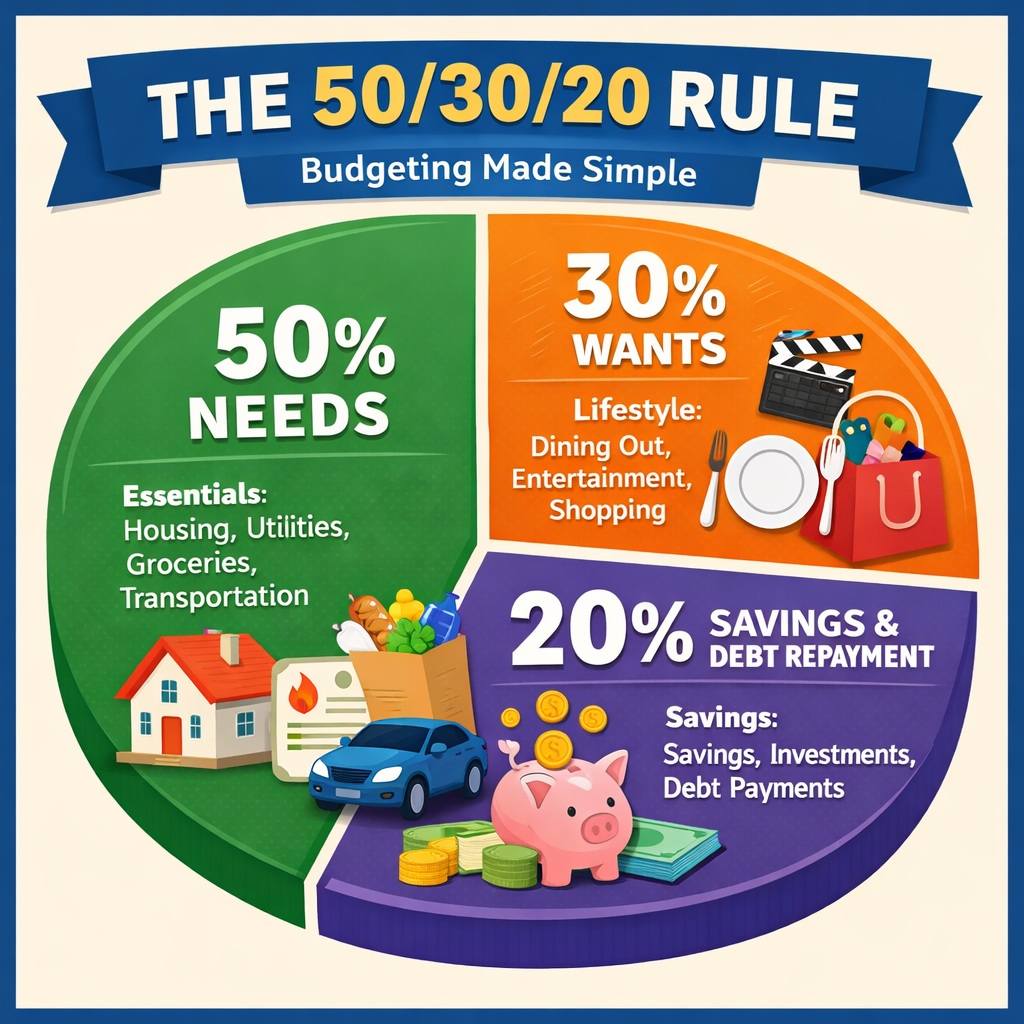
What Is the 50/30/20 Rule?
The 50/30/20 rule is a budgeting method that divides your after-tax income into three categories:
- 50% for Needs
- 30% for Wants
- 20% for Savings and Investments
This structure is also known as the 50 20 30 rule or 50/30/20 budget rule, and all versions mean the same thing.
The power of the 50/30/20 rule lies in balance. It doesn’t force extreme frugality, nor does it encourage reckless spending.
How the 50/30/20 Budget Rule Works
1. 50% for Needs (Essentials)
Needs are non-negotiable expenses. Without these, your life stops functioning.
Examples of Needs:
- Rent or home loan EMIs
- Groceries
- Electricity, water, gas
- Basic transportation
- Insurance premiums
- Minimum debt payments
Under the 50/30 20 budget, if your needs exceed 50%, that’s a warning sign. It means your lifestyle is too expensive for your income.
2. 30% for Wants (Lifestyle Choices)
Wants are optional. They improve comfort but aren’t essential for survival.
Examples of Wants:
- Eating out
- Subscriptions (Netflix, Spotify)
- Shopping for brands
- Travel and entertainment
- Gadgets and upgrades
The 50/30/20 rule allows spending on wants — but with limits. This is why it’s sustainable long-term.
3. 20% for Savings and Investments
This is the most ignored part — and the most important.
Examples include:
- Emergency fund
- Mutual funds
- Fixed deposits
- Stocks
- Retirement savings
- Debt repayment above minimums
Following the 50/30/20 rule strictly ensures you pay yourself first, not last.
50/30/20 Rule Example (Real Numbers)
Let’s say your monthly income after tax is ₹50,000.
- Needs (50%) → ₹25,000
- Wants (30%) → ₹15,000
- Savings (20%) → ₹10,000
This simple structure is why the 50/30/20 budget rule works better than vague advice like “save more” or “spend less.”
Why the 50/30/20 Rule Actually Works
Here’s the hard truth: most people don’t fail financially because of low income. They fail because of no structure.
Key Benefits
- Easy to understand and follow
- Works for beginners and professionals
- Prevents lifestyle inflation
- Encourages automatic saving
- Reduces financial stress
The 50/30 20 rule creates discipline without killing motivation.
Common Mistakes People Make With the 50/30/20 Budget
Let’s call out the nonsense mistakes directly:
- Treating wants as needs
- Ignoring irregular expenses
- Not adjusting percentages when income is low
- Saving leftovers instead of fixed 20%
- Quitting because it’s “too strict”
The 50/30 20 budget only fails when you lie to yourself.
50/30/20 Calculator: Why You Should Use One
A 50/30/20 calculator removes guesswork. Instead of estimating, you get exact numbers.
Benefits of Using a Calculator
- Instant budget breakdown
- Accurate savings targets
- Better expense tracking
- Faster decision-making
If you’re serious about following the 50/30/20 rule, stop using mental math.
50/30/20 Budget Template (Simple Structure)
A 50/30 20 budget template keeps you consistent month after month.
Basic Template Layout
- Monthly Income
- Needs (50%)
- Wants (30%)
- Savings (20%)
- Actual Spending
- Difference
Using a 50/30/20 budget template helps identify leaks before they become financial disasters.
Who Should Use the 50/30/20 Rule?
The 50/30/20 rule is ideal for:
- Beginners in personal finance
- Salaried professionals
- Freelancers with stable income
- People trying to escape paycheck-to-paycheck living
However, if your income is very low, you may need to temporarily adjust the 50 20 30 rule until earnings increase.
Can You Modify the 50/30/20 Rule?
Yes — intelligently.
Some people use:
- 60/30/10 (high living costs)
- 50/20/30 rule (same concept, reordered)
- 40/30/30 (aggressive saving)
But the 50/30/20 rule remains the best starting point for most people.
Final Verdict: Is the 50/30/20 Rule Worth Following?
Short answer: Yes, if you actually follow it.
Long answer: The 50/30/20 rule isn’t magic. It won’t make you rich overnight. But it builds habits that compound over time — and that’s how real wealth is created.
If you want control, clarity, and consistency, the 50/30/20 budget rule is one of the smartest financial frameworks ever created.
You can explore more practical budgeting strategies and real-world money guides at Novuna Personal Finance.